13.90 €
Loading...
Toimitus kaikista varastoista. Hinnoissa saattaa olla eroa myyntipisteen mukaan.Myyntipisteiden hinnat näet tästä linkistä tai (i) napista.
The Jeep Willys was developed to order and demanded by the US Army, which in 1940, faced with the war, asked for a completely new 4x4 passenger car with a load capacity of up to 250 kilograms, which could be mass-produced. It is worth adding that initially the American Bantam Car with the Bantam BRC was the clear favorite in the tender. However, the US Department of Defense, striving to ensure the best possible car design and trying to ensure trouble-free series production, handed over the plans for the Bantam BRC to the Willys and Ford plants. Based on these plans, Willys developed a Jeep that had a much better power unit than the original Bantam BRC, as well as being mechanically more perfect. Ultimately, it was this car, the Willys Jeep, that won the tender for the US Army. The presented car was actually mass-produced and went to almost all Anglo-Saxon armies fighting in World War II, and thanks to the Lend-and-Lease program, also to the Soviet Union. He took part in hostilities in North Africa, Italy, Northwest Europe and the Pacific. It is often assumed that the Jeep Willys is one of the symbols of American triumph in World War II.
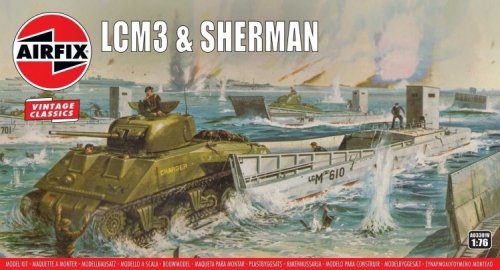
The LVT-2 Water Buffalo was an American amphibious vehicle from the Second World War. The vehicle was powered by an engine Continental W-690-9A with 250 HP. The armament of this amphibious vehicle consisted of four machine guns: two 12.7 mm M2HB and two 7.62 mm M1919A4. About 2,950 vehicles of this type were built in the course of serial production.
The LVT-2 Water Buffalo was a specially developed amphibious vehicle designed to support and support amphibious operations. It was created as a successor to the LVT-1 car. Compared to its predecessor, it was characterized by significantly improved seaworthiness and better off-road ability - after reaching the shore. It was able to transport 24 landing troops with all their equipment. The disadvantages of the vehicle included the completely exposed landing compartment, which exposed the soldiers to fire, as well as the lack of a landing ramp at the front of the vehicle. In 1943, the modernized version (LVT-2 (A) Buffalo II) entered production, with armor up to 10 mm thick. This resulted in an increase in weight and reduced the capacity to carry people - from 24 to 18 soldiers. The LVT-2 vehicles were used on a large scale during the fighting in the Pacific, including in Tarawa in 1943, Saipan one year later, or during the bloody fights on Iwo-Jima and Okinawa in 1945. Some of these vehicles were also used to cross the Rhine by the Allied forces in 1945.Tuotteen lisäyspäivä: 28.8.2024. Lisää ostoskoriin Edellinen Cable Guys: Marvel - Ikon Deadpool Emblem (20cm) GADGET 37.00 € Cable Guys: Disney The Nightmare Before Christmas - Pumpkin King GADGET 31.90 € Seuraava